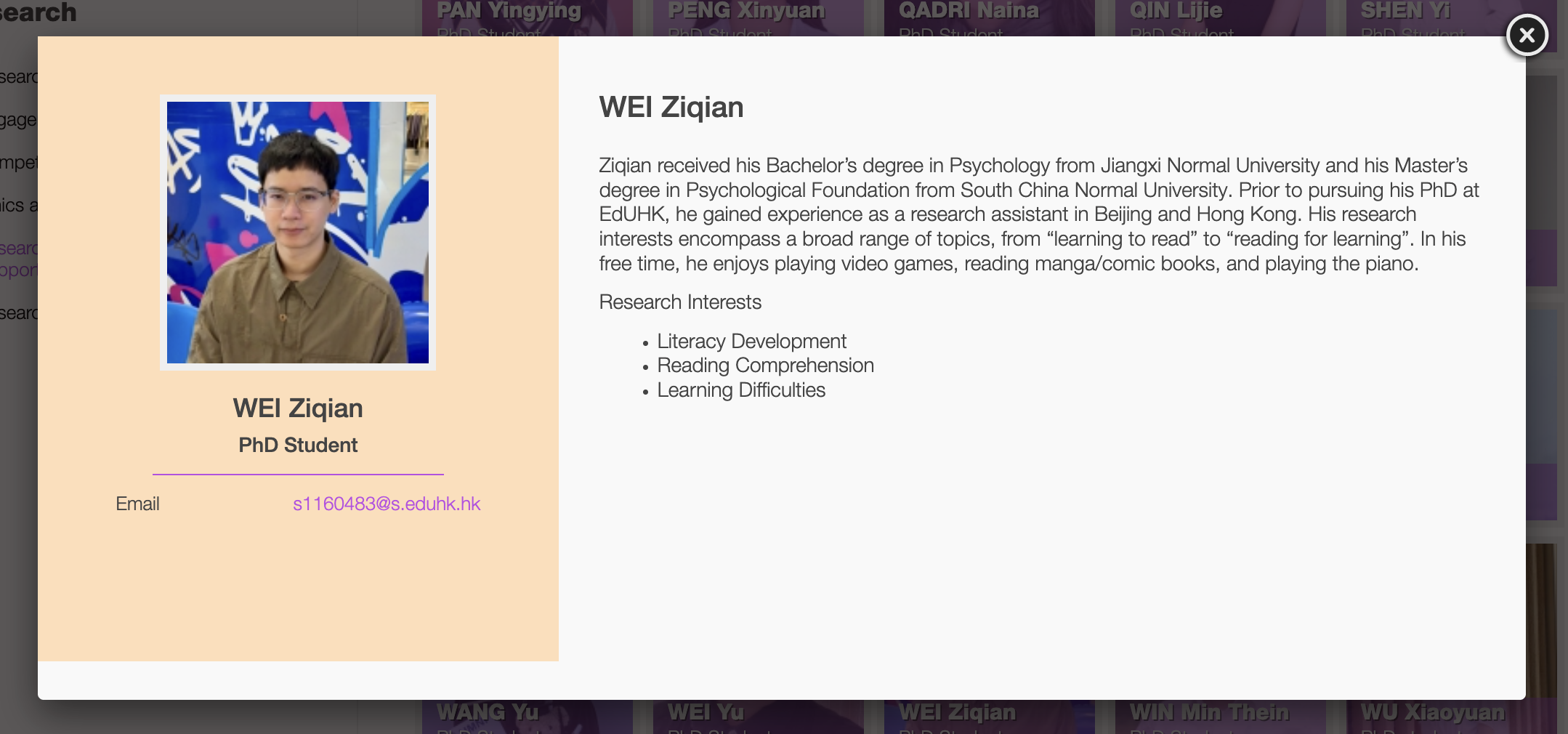
Profile #
I needed to provide a brief self-introduction accompanied by a photograph for the faculty website (FEHD, Faculty of Education and Human Development). Initially, I submitted two photographs as required, namely A and B, for clarity, and mentioned that I preferred A. However, the faculty assistants (I assume it was them) ended up choosing B and replied that they couldn’t tell which one I preferred since they couldn’t see the filenames. I then asked them to use a new photograph, C, which I attached. It turned out that this one looks perfect to me. Bblythe took many photographs for me to consider. She said that C doesn’t look like me and that I appear too “polite” in it. I answered: “True, but don’t you see, that’s precisely what a profile photograph is supposed to look like.”
Student Orientation #
I spent two hours participating in the student orientation event on 3rd September. I brought my laptop to this event, but I eventually didn’t use it because my wallpaper is a Japanese anime girl sitting in a shopping cart with a slightly acceptable erotic style. I had forgotten to change the wallpaper, and I hadn’t sat in the last row, so I would be socially dead if I opened my laptop.
Lifestyle #
I shifted to remote working at the beginning of this semester and only visited the campus one or two days on weekdays if needed, such as when taking a class or having a weekly lab meeting with my supervisor. I was pretty busy since entering my PhD study and thereby felt so relieved that I could save the time of two and a half hours commuting on the day that I didn’t need to travel from Shenzhen to Hong Kong, though as the price I losing some fun at campus (I even missed the free pizza day 🍕 this semester! 😢 But, at least, I had participated in it months ago). I started trying to read novels on the MTR. I don’t want to look like a desperate bookworm, but I have to do so or else I won’t have time to read.
Mindset #
I thought it wasn’t bad for me to pursue a PhD at EdUHK. I am researching the cognitive mechanisms and development of reading, including word reading and comprehension, particularly in Chinese-speaking children. Hong Kong is an international city with great language diversity, and it is therefore reasonable that research on reading education here is world-leading. HKU and CUHK are more prestigious than EdU in terms of university rankings, but I have an excellent supervisor and three years of fully covered funding; what else should I ask for? In addition, HKU and CUHK are more competitive. What matters is that I gradually realise that, except for some things that happen ordinarily, things will be different if you find the area that interests you. It’s not just for survival, or seeking money, or social status, which often makes you become someone else rather than be yourself. What I really enjoy is “building sand castles at the beach”, just like a child, to experience pure happiness and satisfaction.
Doctoral Title #
If my understanding is correct, the official name of the programme I am studying in is the Doctor of Philosophy (PhD). Another programme provided by EdU is the Doctor of Education (EdD). So, after the study, I will simply be a PhD, instead of having a title like Doctor of Psychology or Doctor of Educational Psychology. I asked DeepSeek and learned that this is because HK follows the UK’s traditions. In the USA, it’s common to have more specific doctoral titles.
INT7115: AI in Education #
I first registered for this course (held every Friday night) and took the class for two weeks, but then I found that the class time conflicted with SCG8012, so I quit it and chose SCG8012 (which also involved the teaching of AI, and more importantly, it only contains four classes plus one time of presentation). AI is a promising area. When helping to collect data in mainland China, a dean in a primary school also told us that they want to integrate AI and Chinese language education.
The way we use AI matters to our lives. For example, one day I wanted to search for some statistics on how university students use GenAI. I found some data in the news, but not data sources, so I doubted that journalists prompted GenAI to prepare the reports, which, of course, include some fake data due to AI hallucination. Perhaps all kinds of writers should carefully clarify their data sources in the era of AI.
SCG8012: Technology for Science Education #
The two instructors, Dr CHING Ping Pui and Dr LI Tin Lok Matthew, are very passionate and professional. There are four topics, including Hardware, GenAI, Machine Learning, and Data Visualisation, taught separately every two weeks, so I only need to take four classes. The assignments include a reflective report (in the form of an oral presentation) and an essay to introduce the literature on a technique in teaching and learning specific science topics (e.g., physics, biology, geometry). I learned some interesting tools for teaching science during the class, such as POE.com (a website for creating self-modified AI agents) and Teachable Machine. There is an area in reading comprehension research called Science Reading, and I have been interested in Educational Technology for a long time, so this course also benefits my academic knowledge.
The presentation: In short, every student conducted a literature review on three selected areas and shared their findings. I started it quite late. On Tuesday, I emailed the instructors to confirm the requirements. On Wednesday, I went to Disneyland. I completed one-third of the work on Thursday and the remaining work on Friday morning. I took the course EDD7025 on Friday afternoon, grabbed dinner afterwards, and practised the presentation for a while (mostly checking the pronunciation of some words). I was too nervous during the presentation, but at least I had read those papers myself and provided details that followed the requirements (e.g., citations, learning outcomes, limitations). I introduced Virtual Lab, Concept Map, and GenAI. They should be familiar with the first and the third, so they asked one question due to the time limit for concept mapping. That is, how does concept mapping really help students to learn science? I researched the effects of concept mapping on reading comprehension for three years, and I must admit that I think its effects are not as significant as those of other applied instructional methods. This reminds me that from psychology to education (or educational psychology), researchers care about different things (like revealing the mechanisms and theories, or the power in real-life education). So, for the question, I only explained that concept mapping can be used for preparing teaching materials, and forgot to mention how it may promote learning. To summarise, I would rate myself as demonstrating 80% competency on this task. BTW, I was glad that they allowed students who live in SZ, including me, to report and leave earlier so they can catch the MTR.
The 3,000-word essay: Again, I started it very late. By nearly midnight on November 29th, I finally completed the essay. I didn’t even have time to proofread it thoroughly because there was still one last step, which is uploading the essay to Turnitin to check before formal submission. However, I hadn’t found the access to Turnitin at first, which drove me crazy, but then I realised that I just needed to submit the assignment directly and Turnitin was embedded in the process already. At 11:52 pm, I eventually completed the submission and received a confirmation email before the DDL (i.e., 00:00). The biggest takeaway for me is to start assignments early. The hardest part is often just getting started, but once you begin, things tend to fall into place.
Thoughts: A night when I came home late at ten thirty, I suddenly wanted a bathroom with huge floor-to-ceiling windows and a bathtub placed right in front of them. After getting off work at night, I could lie down in the bathtub. No need to turn on the lights, I’d stay in the dark, watching the city lights outside, especially the flowing streams of traffic. Still, I hope I won’t have to leave work later in the future.
EDD7025: Foundation in Research Methods #
This composary course is held from 15:30-18:20 on Friday, and then from 18:30 I need to take SCG8012. What a schedule! I suppose the intense course timeline is due to the large number of students enrolled this year, and I’ve heard that the university even has to provide a shuttle service to allow students to have lunch off campus.
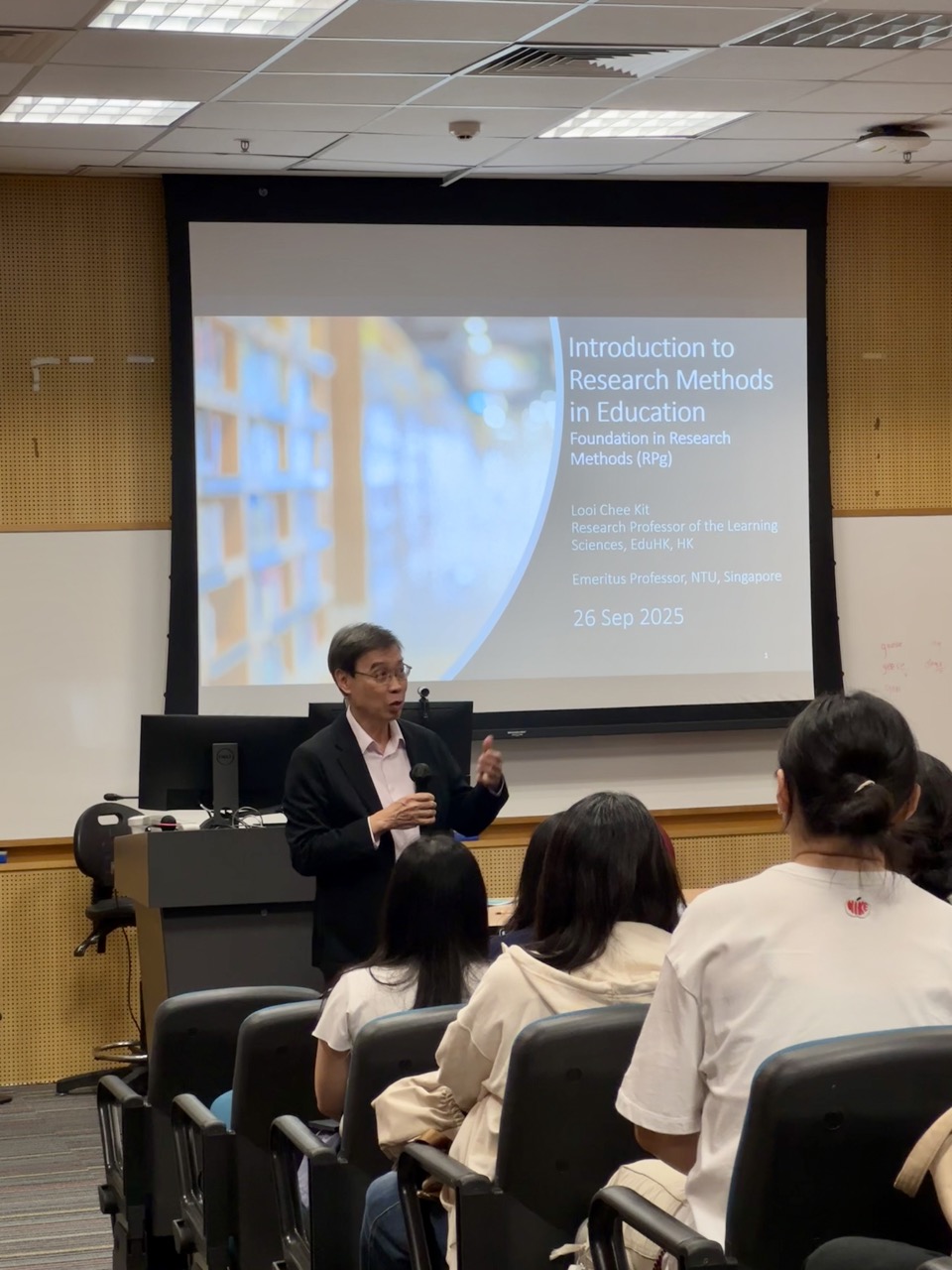
Dr LING, Man Ho Alpha, was in charge of the quantitative statistics part. He would provide some questions for students to discuss, and he would come to every student to encourage them to share their thoughts with him. The assessments include online assignments after each class and a paper-based quiz at the last class (I missed some items because I didn’t understand some vocabulary). Nevertheless, I was glad to consolidate my statistical knowledge in another language.
Dr CHAN, Kit Wa Anita, was in charge of the qualitative methods part. Her speech and the organisation of the class are impressive. She’s also incredibly welcoming of students who want to discuss with her during class. One interesting point she mentioned for justifying the need for qualitative research is a unique concern about child adoption in Hong Kong: it turns out that adopted children may face difficulties in the culture of education, since people study hard very much in HK. I may not use qualitative methods for my PhD study, but I was gald to enrich my knowledge. This time, I started to do the assignment early (an proposal for a qualitative study), but slowly, as I realised that I only need to write 1,200 words. It’s really a short essay. Once I finished proofreading, I found that I wrote exactly 1,200 words, how coincidence!
I have also become further convinced that AI is an inevitable next step in education. As an example, we were required to confirm that we didn’t using AI except for grammar check for this qualitative method assignment. However, common search engines, including the academic ones like Web of Science and Google Scholar, have embedded the AI-powered semantic/context search mode, opposite to the conventional keyword-based method.
Life & Social #
On September 9th, I met BBblythe’s former supervisor, Professor CHEN, Chongxian, at South China Agricultural University with Bblythe. I really like the campus. According to Prof CHEN, finding an academic position in Chinese universities is more and more competative (not surprisingly), requring both high-quality publications (at least five, for the purpose of appling to the young researcher’s grant) and a young age (below 35yo for male, for the purpose of appling to the young researcher’s grant).
The next week I met my Master’s supervisor, Professor CHEN, Xuqian, at the South China Normal University. The train was accidently delay so I was late for half an hour. What a shame. We discussed the possibilities of AI-related reading comprehension research.
I also regather with Dr JIA, Luxia, at Guangzhou University, who then introduce Professor ZHANG, Bao, the associated dean in the school of psychology, to me. I seeked suggestions about academic career from them. I also gave a lecture for the undergraduates there. The environment at the Guangzhou Higher Education Mega Center is good, and I don’t mind to ride a bycile for the whole day there.
I recently noticed that many young, promising researchers with excellent educational backgrounds and publications (or who will have them in the future, as indicated in their self-introductions) have joined the Department of Psychology at Shenzhen University this year after obtaining their PhD. Their department has developed rapidly, and now the bar looks so high! If I could find a faculty member position at SZU, I would die in my sleep with a smile ☺️.
Research #
I began developing this homepage in August, so I will summarise what has happened with the projects in EdU I led or participated in since then. Let’s begin with Project A, a paper on reading interest that was published online in Reading and Writing in August. The statistical method has changed a lot since the very first version (from regression to path analysis). While many research focuses on the predictors of reading outcomes, this study explore how diverse factors may contribute to the motivational aspect.
Project B, a transdiagnostic study on neurodevelopmental disorders (NDDs), was finally accepted by BMC Psychiatry in December. Before that, it had been rejected by five journals due to subjective reports and a one-wave design. But still, the findings of this paper serve as important empirical evidence and contribute to the development of the special education needs (SENs) and inclusive education, especially for mainland China (as data was collected in Guangdong province). We referred statistics and systems in Hong Kong to justify and explain the need of a transdiagnostic method, while the corresponding parts in the mainland are relatively lacked. I was glad that I could enrich my understanding of reading from a neurodevelopmental perspective.
These two papers are an exciting beginning and a satisfying end for this period, respectively. Other works were still in progress. Project C has been rejected twice, and now its analytic plan needs to be reconsidered. I completed the initial version of the manuscript for Project D by September and continued to improve in the past months. I hope to hear more good news next year. Project E was still in its early stages. I dislike talking about things that have not been done yet. Authors should not mention unfinished books, as such sharing and socialising will weaken their enthusiasm for crafting. If you have gossiped a story with one of your friends, you probably will not write this story down. Academic writing isn’t exactly like creative writing, but still, I prefer to talk more about my products after publication.
I was also working on a proposal for my doctoral thesis, which is definitely the most important job I should concentrate on these days. I was happy that my supervisor agreed with my selection of the topic, which I was most interested in. I also found the insight into how this promising project can link to the research field that I was working on. I truly believe that I will produce some high-quality papers in this project and make it a starting point for my further work afterwards.